
Security & Regional Affairs
Puntland’s Counter-Piracy Campaign Disrupts Hijacking Networks, but Maritime Threat Remains
Puntland’s recent counter-piracy operations have delivered the most significant disruption to pirate networks operating off the Somali coast since the latest wave of hijackings began, according to Lloyd’s List Intelligence.
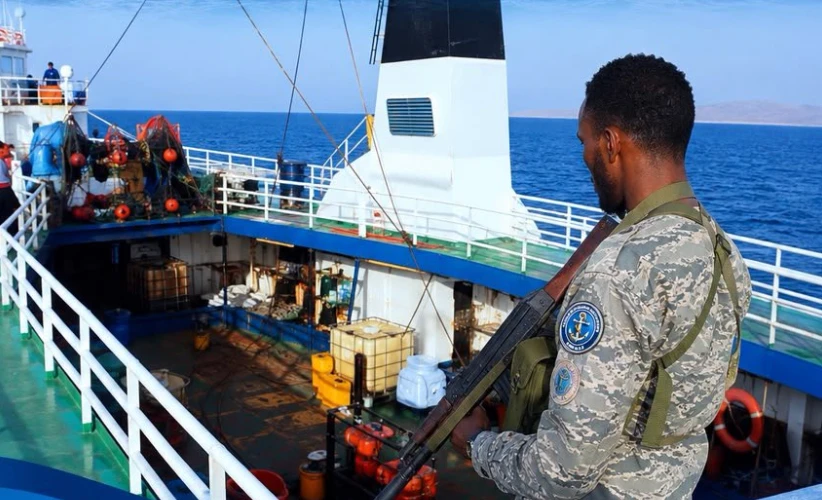
Puntland Maritime Police Force / @PMPFOFFICIAL
Puntland’s recent counter-piracy operations have delivered the most significant disruption to pirate networks operating off the Somali coast since the latest wave of hijackings began, according to a new assessment by Lloyd’s List Intelligence.
Published in its October 1 Red Sea Brief, the assessment follows a series of operations in which Puntland forces recovered vessels held by pirates, reversing months of expanding activity along the Puntland coast and across the Gulf of Aden.
Read the Lloyd’s List Intelligence assessment: https://www.lloydslistintelligence.com/resources/blog/red-sea-brief-1-october-2026
As recently as late August, six commercial vessels were being held by pirate groups. Five have since been released or recovered, a development Lloyd’s List Intelligence describes as the most significant disruption of pirate networks since attacks began increasing again across the region.
Puntland forces played a central role in that reversal, and in September Puntland security forces recovered SIBU 1, also known as SEAMULL, HONOUR 25 and EUREKA. The International Maritime Organization later confirmed that 44 seafarers were freed from the three vessels.
The operations significantly reduced the number of ships under pirate control at a time when captured vessels were increasingly being used as motherships, allowing armed groups to operate farther offshore and target shipping across a much larger area.
The gains, however, do not mean the piracy threat has disappeared. Pirate groups have demonstrated access to weapons, communications equipment, boats and shore-based support networks. Improving maritime conditions following the monsoon season could also create new opportunities for attacks.
The larger challenge is therefore on land as much as at sea. Previous international reporting has identified networks of financiers, weapons suppliers, fuel providers, negotiators and other facilitators supporting piracy operations. Recovering hijacked vessels disrupts those networks, but lasting deterrence will require targeting the infrastructure that allows pirate groups to reorganize.


